Facebook
 X
 Pinterest
 Copy Link
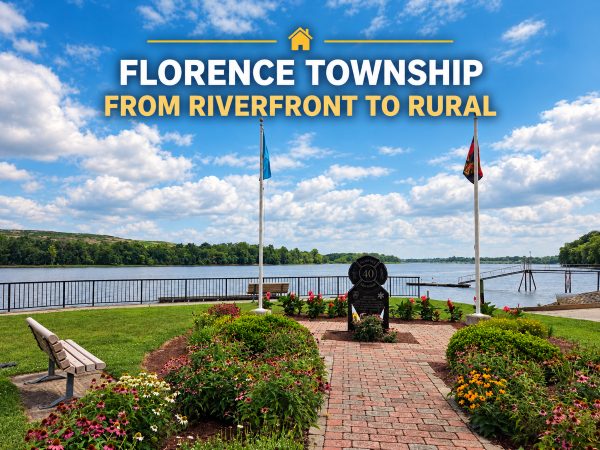
Florence Township has more than one side to it, and the Delaware River is only one part of the story.
Stand along the waterfront in Florence, and you get a sense of the township’s connection to the river. But spend some time driving through its neighborhoods, and the housing can look very different depending on where you are.
Roebling has its familiar brick twins and historic streets. Florence itself has older residential neighborhoods with a mixture of housing styles. Other parts of the township open up into larger lots and more rural surroundings. There are also newer neighborhoods with larger suburban homes, along with townhouse, condominium, and age-restricted communities that offer completely different residential settings.
They are all part of the same township, but they do not all look or feel the same.
That variety is one of the things that makes Florence Township interesting from both a community and real estate perspective.
Roebling And Its Twin Homes
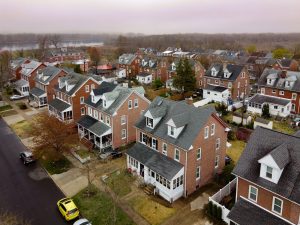
The historic brick homes and closely arranged streets of Roebling reflect the community’s development as a company town in Florence Township.
One of the most recognizable parts of Florence Township is the historic village of Roebling.
Drive through the numbered avenues, particularly the residential streets around Second through Eighth Avenues, and the character of the neighborhood is immediately apparent.
Brick twin homes line many of the streets, often with covered porches, sidewalks, and relatively small front yards. The homes sit close together, creating a streetscape that is noticeably different from the more suburban neighborhoods found elsewhere in Florence Township.
That housing pattern is closely connected to Roebling’s industrial history.
The village was developed in the early 1900s as a company town for workers employed by the John A. Roebling’s Sons Company. The company constructed hundreds of brick homes, along with other buildings and facilities that supported the growing community.
Today, the Roebling Museum helps preserve that history, including the story of the steel mill, its workers, and the community that developed around them.
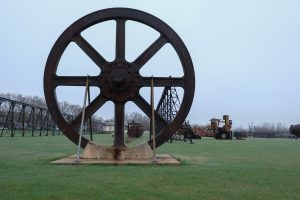
Historic industrial equipment displayed at the Roebling Museum preserves a connection to the steelmaking operations that shaped the surrounding community.
Much of that original residential character remains visible today.
Of course, not every home in Roebling is a brick twin. There are different housing styles, sizes, and arrangements throughout the community. But the twins and the closely arranged streets remain among its most recognizable features.
And while Roebling is part of Florence Township, it has maintained a distinct identity that many residents continue to recognize and identify with.
I explored more of that history, along with the neighborhoods and community character that make Roebling different, in my earlier article, Why Roebling NJ Feels Different From Anywhere Else Nearby.
The Older Streets Of Florence And The Delaware River
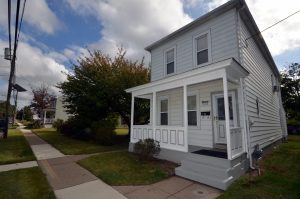
Older residential streets in Florence include a mix of detached homes and neighborhood patterns that differ from the more uniform housing found in Roebling.
The older residential streets of Florence have a character of their own.
Around Front Street, Broad Street, Delaware Avenue, and the numbered streets extending through the older neighborhoods, homes reflect different periods of development rather than one repeated housing style.
That variety is noticeable as you move from block to block. On one street, you may see a traditional detached home with a covered front porch, a sidewalk, and a modest setback from the road. On another, the spacing, architectural styles, and overall streetscape may look a little different.
Unlike the more uniform brick twins found throughout much of Roebling, the older neighborhoods of Florence often have a more varied appearance, with different types of homes sharing the same streets.
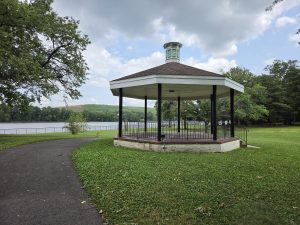
The Delaware River remains an important part of Florence Township’s setting, with public spaces such as H. Kenneth Wilkie Memorial River’s Edge Park helping connect the community to the waterfront.
The Delaware River also adds another dimension to this part of the township.
Florence developed along the river long before many of today’s newer neighborhoods were built, and that waterfront setting remains part of the community. Public spaces such as H. Kenneth Wilkie Memorial River’s Edge Park and the municipal boat launch area help preserve that connection.
The combination of older residential streets, different housing styles, and access to the Delaware River gives this part of Florence Township a setting of its own.
But travel farther inland, and the surroundings can change considerably. In some areas, the closely arranged residential streets give way to larger properties, wooded surroundings, and a much more open landscape.
The More Rural Side Of Florence Township
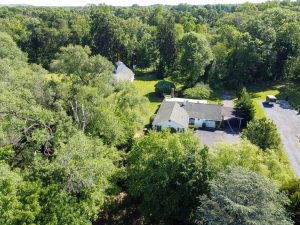
Some parts of Florence Township feel far more open and wooded, with larger properties and fewer neighboring homes in view.
Along some of Florence Township’s less developed roads, the spacing between homes opens up considerably.
Properties may have longer driveways, larger yards, wooded surroundings, or open land extending well beyond the house itself.
Some properties occupy an acre or more, while others have several acres of land. Instead of closely arranged homes and sidewalks, these areas often have fewer houses visible from the roadway.
And even within these more rural sections, the settings can vary. Some homes are tucked among mature trees, while others sit farther back from the road with broad lawns and more open surroundings.
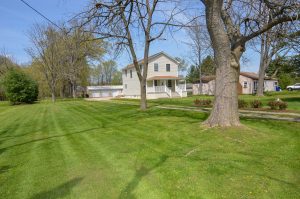
Other rural sections of Florence Township show a different kind of openness, with broad yards, mature trees, and homes set farther apart.
The differences are not limited to how the properties look.
Some homes in the more rural portions of Florence Township rely on private wells and septic systems rather than public water and sewer. That is an important distinction for buyers to understand because property maintenance and ownership responsibilities can vary depending on the systems serving the home.
Not every larger property has those systems, so it is something that needs to be verified individually.
For someone accustomed to Roebling’s brick twins or the older residential streets of Florence, encountering a home with this much land can feel like stepping into an entirely different community.
Yet it is still Florence Township.
Newer Neighborhoods And Suburban Developments
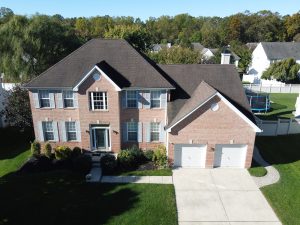
Mallard Creek shows another side of Florence Township, with larger detached homes, attached garages, and suburban residential streets.
Florence Township also includes residential neighborhoods that developed much later than the older communities closer to the Delaware River.
Mallard Creek is one example, with detached single-family homes built primarily during the late 1990s and early 2000s. Larger floor plans, attached garages, and landscaped front yards create a streetscape that looks quite different from the brick twins of Roebling or the older residential streets of Florence.
The difference goes beyond the houses themselves. Driveways, wider setbacks, and more space between homes become a larger part of the neighborhood setting.
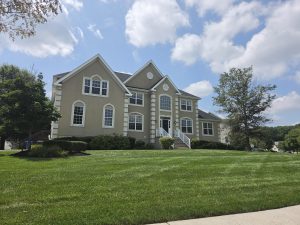
A home in Estates at Crossroads illustrates the larger houses and broad front lawns found in another of Florence Township’s suburban neighborhoods.
Estates at Crossroads provides another example of this suburban side of Florence Township, including substantial two-story homes with larger floor plans and broad front lawns.
Even between these two communities, the houses do not all look or feel the same. Architectural details, home sizes, lot dimensions, and the arrangement of neighboring properties can create different settings within the same general category of suburban housing.
For buyers, those differences are worth understanding. Comparing homes involves more than counting bedrooms or looking at square footage. The property’s layout, outdoor space, and position within the neighborhood all contribute to how it functions day to day.
Both Mallard Creek and Estates at Crossroads add another layer to the township’s housing mix, alongside its historic streets, older detached homes, and rural properties.
Florence Township didn’t develop all at once, and those different periods remain visible in its neighborhoods today.
Townhouses, Condominiums, And HOA Communities
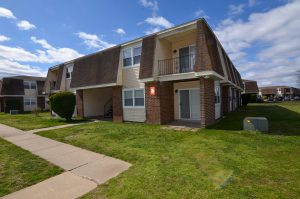
Florence Tollgate is one of the condominium communities that adds another type of housing option to Florence Township.
Another important part of the housing mix in Florence Township comes from its condominium, townhouse, and homeowners association communities.
And even within this category, the housing can look and function quite differently.
Florence Tollgate is one example. Its condominium buildings provide a different residential arrangement from the detached homes and brick twins found elsewhere in the township.
The buildings contain individual condominium units, with common areas and property responsibilities governed by a condominium association.
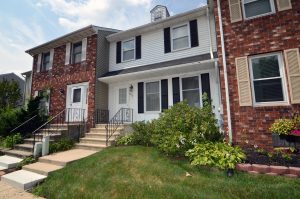
Carriage Stop introduces another style of attached residential housing within Florence Township.
Carriage Stop introduces another type of attached residential housing. Its townhouse-style condominium properties differ in appearance and layout from the units found at Florence Tollgate.
While both communities provide attached housing options, the architectural styles and arrangement of the homes create noticeably different residential settings.
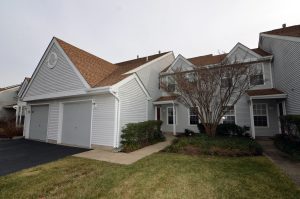
Birch Hollow offers another distinct townhouse setting within Florence Township, with attached homes, garages, and shared community amenities.
Then there’s Birch Hollow, a larger townhouse community with attached homes, garages, and shared amenities. The homes and neighborhood layout provide another distinct residential setting within Florence Township.
Florence Township also includes Greenbriar Horizon, an age-restricted active adult community featuring detached single-family homes.
Although its homes resemble those in some of the township’s other suburban neighborhoods, its age restrictions, homeowners association, and community structure distinguish it from traditional single-family developments.
These communities help illustrate an important point about housing choices.
Two properties within Florence Township may have similar square footage or even comparable asking prices, but their ownership structures and ongoing responsibilities can be quite different.
Association fees, exterior maintenance, shared amenities, property rules, and other obligations are all considerations that can vary from one development to another.
For buyers, understanding those differences is just as important as comparing the homes themselves.
And from a broader community perspective, these developments add several more residential settings to a township that already includes historic neighborhoods, rural properties, and traditional suburban subdivisions.
One Township, Very Different Settings
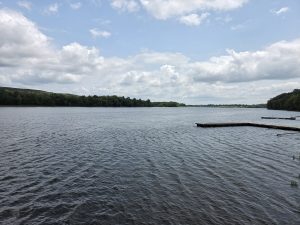
The Delaware River waterfront is another part of the varied landscape found throughout Florence Township, NJ.
Florence Township is a good example of why a town name alone doesn’t always tell you what a neighborhood will look or feel like.
Within the same municipality, you can find the brick twins of Roebling, the older residential streets of Florence near the Delaware River, homes on larger rural properties, newer suburban developments, and several distinctly different condominium and HOA communities.
Each represents another part of the township’s development over the years.
For buyers, that variety creates more than one type of housing option within the same municipality.
Someone interested in an older home with architectural character may be looking at a very different part of Florence Township than someone searching for a larger property, a suburban neighborhood, or a home within an association community.
For homeowners and sellers, these differences matter as well.
A home in Roebling may have a different group of comparable properties than one in Mallard Creek, Birch Hollow, or the township’s more rural areas.
Understanding the specific neighborhood, housing style, lot characteristics, and surrounding development is often more useful than treating Florence Township as one uniform real estate market.
And that’s really what makes this township worth looking at more closely.
There isn’t just one version of Florence Township.
There are several, each with its own character, housing choices, and sense of place.
What This Means For You
If you’re starting to think about your next move, whether buying or selling, understanding what to expect in the current real estate market can help you be better prepared and put yourself in a stronger position.
I’ve been working in real estate since I was licensed in 2012, with nearly 500 real estate transactions across Hamilton Township, Bordentown, Florence Township, Roebling, and surrounding areas. And one thing I’ve learned is that every town, and even different sections within a town, can feel very different depending on the home and the buyer.
My approach is simple and relationship-driven. I focus on helping you make the right decision for your situation, not just the next transaction.
If you want to talk through your situation, explore your options, and get a better feel for what makes the most sense, I’m always here to help.
Explore More Local Real Estate Options
Whether you’re thinking about buying, selling, or simply keeping an eye on the market, you can explore homes for sale and home values throughout Hamilton Township, Bordentown, Florence, Roebling, and surrounding areas below.
⬇️ Click any image below to explore homes for sale in that area.