Facebook
 X
X
 Pinterest
 Copy Link
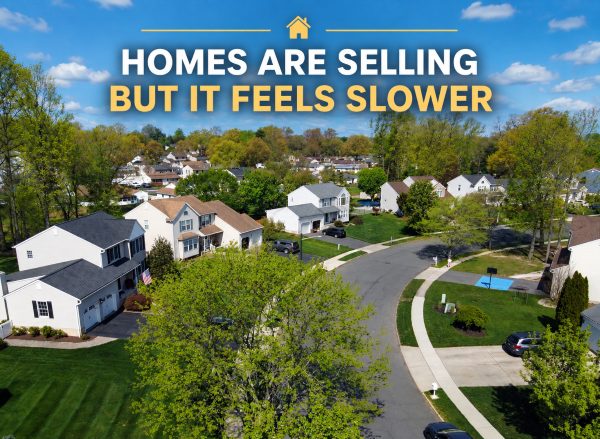
One of the easiest ways people judge the real estate market is by asking a simple question.
Are homes selling quickly or not?
But that doesn’t always tell the whole story.
A market can still have plenty of activity even when individual homes take longer to sell, buyers become more selective, and different price ranges or property types move at very different speeds.
That is one reason why the real estate market feels slower even when homes are still selling.
Homes are still selling. Buyers are still making offers. Sellers are still moving forward.
The difference is that the pace may not look the same across every home or every part of the market.
And that is why looking only at how quickly a home sells can sometimes give an incomplete picture of what is actually happening.
A Slower Pace Doesn’t Necessarily Mean A Weak Market

A change in how quickly homes sell does not necessarily mean demand has disappeared or the overall market is weak.
A slower pace doesn’t automatically mean the real estate market is weak.
For several years, buyers and sellers became accustomed to homes receiving immediate attention and, in many cases, offers within just a few days.
When that pace changes, it can make the market feel dramatically different even when homes are still selling.
A property taking two or three weeks to find the right buyer instead of several days may still be performing normally for that particular price range, location, and property type.
Buyers may simply be taking more time to compare their options, think through the monthly payment, or decide whether a particular home is the right fit.
For sellers, that change in pace can sometimes feel like demand has disappeared when what has really changed is how quickly buyers are making decisions.
That is an important distinction.
The speed of the market and the health of the market are not always the same thing.
Buyers Have More Reasons To Be Selective

As buyers become more selective, layout, condition, and overall livability often matter just as much as price.
Buyers today often have more reasons to pause, compare, and think carefully before making an offer.
Monthly payment plays a major role, and that can cause buyers to weigh each decision more closely than they might have in a faster-moving market.
Instead of feeling pressure to act immediately, many buyers are taking a little more time to compare homes, study condition, and decide whether a layout truly works for their needs.
That means details such as updates, room flow, functionality, and location can stand out more clearly than they might have when the pace of the market was more intense.
A home that may have received several quick offers in a different market can still attract strong interest today, but it may need the right buyer rather than simply the next available buyer.
That does not mean buyers have disappeared.
It often means they are being more deliberate about which home they choose and why.
Pricing Becomes Easier To See

When buyers have more time to compare homes, differences in pricing and overall value can become easier to see.
In a very fast-moving market, strong buyer demand can sometimes make small pricing mistakes harder to notice.
When buyers are competing heavily and homes are moving quickly, there may be enough demand to keep activity strong even when a property is priced a little aggressively.
As the pace becomes more deliberate, those differences tend to become easier to see.
Buyers have more time to compare similar homes, look at condition and features, and decide which property offers the strongest overall value.

Condition and updates become part of the value comparison when buyers have more time to evaluate competing homes.
Homes that are positioned well can still attract strong attention.
But when a property is priced or positioned above where buyers see the value, it may sit while competing homes nearby continue to sell.
That does not necessarily mean something is wrong with the home.
Sometimes the market is simply providing clearer feedback about how buyers see the price compared with the other choices available.
When that feedback continues over time, sellers may eventually need to decide whether a price adjustment makes sense. I took a closer look at that decision in When Should I Lower The Price Of My House?
Not Every Part Of The Market Moves At The Same Speed

Different neighborhoods, price points, and property types can all behave differently within the same overall market.
Not every part of the real estate market moves at the same speed.
That is one of the biggest reasons broad market headlines can feel misleading when buyers or sellers try to apply them to one specific situation.
Two homes can be listed at the same time and have completely different experiences based on where they are located, how they are priced, what condition they are in, and which buyers they appeal to.
Activity can vary by town, neighborhood, price range, property type, condition, taxes, HOA costs, and even the amount of competing inventory available at that moment.
A Hamilton Township ranch, a Bordentown City row home, a Florence townhouse, and a larger suburban colonial may all be part of the same regional market, but they are not necessarily competing under the same conditions.
That is why it is so important to look at the market in smaller pieces instead of assuming every segment is moving the same way.
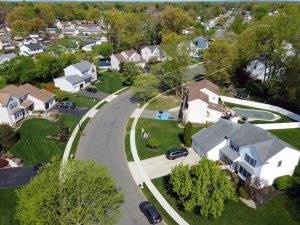
One community may be moving differently from another even when both are part of the same local market.
In some cases, the difference is not just between towns, but between neighborhoods within the same town.
One area may have strong demand because of price point, layout, or limited inventory, while another may move more slowly because buyers have more competing choices or a smaller pool of interest.
That does not mean one market is healthy and another is not.
It usually means each mini-market has its own conditions, and those conditions deserve to be evaluated on their own.
Days On Market Need Context

A distinctive older home may appeal to a different group of buyers than a more typical suburban property, which can affect how long it takes to sell.
Days on market is one of those numbers buyers and sellers tend to notice immediately.
But by itself, it does not tell you very much.
A home being available longer than another property does not automatically mean something is wrong with it.
Some homes simply have a smaller pool of potential buyers because of their style, location, price point, size, or other characteristics.
HOA costs, community type, and property style can all influence the size of the buyer pool and how quickly a home moves.
That is why comparing one property’s days on market directly with another can sometimes be misleading.
Price changes, condition, timing, competition, taxes, HOA costs, and the amount of similar inventory available can all affect how quickly a buyer comes along.
A home with more distinctive characteristics may naturally appeal to a smaller pool of buyers and take longer to sell, even when it is priced appropriately.
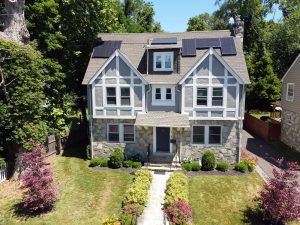
Distinctive architecture, size, features, and location can all make one home’s market very different from another.
That is why the surrounding activity matters so much.
Looking at what comparable homes are doing, what buyers are choosing, how much competition exists, and whether similar properties are selling gives you much more useful information than simply looking at single days-on-market number.
Days on market is part of the story.
It just needs context.
I took a closer look at some of the reasons one property may move quickly while another takes longer in Why Some Homes Sit On The Market In Hamilton Township While Others Sell Quickly.
What A Changing Market Means For Buyers And Sellers

A well-presented home can still attract strong attention, but in a changing market both buyers and sellers benefit from realistic expectations and an understanding of current conditions.
For buyers, a market that feels a little slower can create more room to think, compare options, and make decisions more carefully.
That can be a real advantage.
At the same time, buyers should not assume that every home will sit or that competition has disappeared. Well-priced, well-presented homes can still attract strong interest and competition.
For sellers, changing market conditions usually make preparation, presentation, and realistic pricing even more important.
When buyers have more choices and more time to compare, they notice condition, layout, updates, and overall value more clearly. That makes proper positioning more important than simply expecting the market to do all the work.
For both sides, the biggest takeaway is simple.
Neither buyers nor sellers should assume that yesterday’s market rules automatically apply today.
The best decisions come from understanding the market as it is now, not as it was a season or two ago.
What This Means For You
If you’re starting to think about your next move, whether buying or selling, understanding what to expect in the current real estate market can help you be better prepared and put yourself in a stronger position.
I’ve been working in real estate since I was licensed in 2012, with nearly 500 real estate transactions across Hamilton Township, Bordentown, Florence Township, Roebling, and surrounding areas. And one thing I’ve learned is that every town, and even different sections within a town, can feel very different depending on the home and the buyer.
My approach is simple and relationship-driven. I focus on helping you make the right decision for your situation, not just the next transaction.
If you want to talk through your situation, explore your options, and get a better feel for what makes the most sense, I’m always here to help.
Explore More Local Real Estate Options
Whether you’re thinking about buying, selling, or simply keeping an eye on the market, you can explore homes for sale and home values throughout Hamilton Township, Bordentown, Florence, Roebling, and surrounding areas below.
⬇️ Click any image below to explore homes for sale in that area.