Facebook
 X
X
 Pinterest
 Copy Link
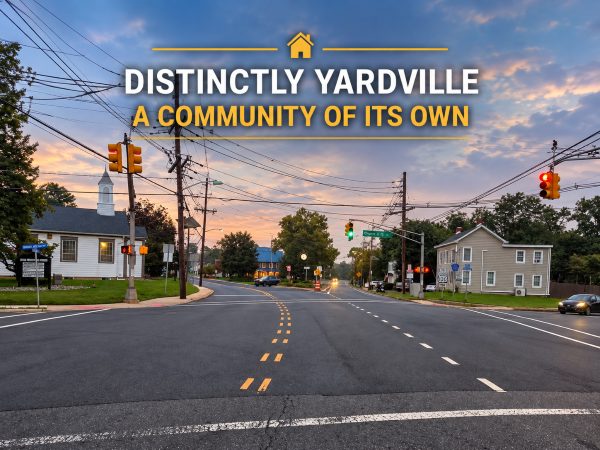
There are certain neighborhood names in Hamilton Township that residents use almost as naturally as the name of the township itself.
Ask someone where they live, and there’s a good chance they’ll simply say, “Yardville.”
Yardville is part of Hamilton Township, but its identity feels much more specific than simply saying Hamilton.
Long before today’s neighborhoods were developed, the area was known as Sand Hills. The Yardville name was adopted in 1832 when John Yard successfully applied to establish a post office there.
That identity continued as neighborhoods developed, bringing different generations of homes along with familiar roads, parks, athletic fields, schools, shopping areas, and local landmarks.
Within Yardville itself, smaller neighborhood areas such as Sunnybrae, Yardville Heights, Dover Park, Washington Square, and the Highlands add another layer.
After spending enough time here, it’s easy to understand why Yardville can still feel like a community of its own.
The Roads That Bring You Into Yardville
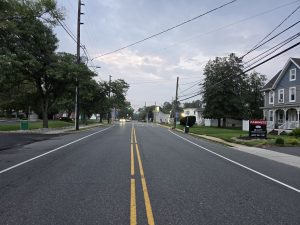
South Broad Street is one of the primary roads leading into Yardville, connecting with Yardville-Hamilton Square Road and Yardville-Allentown Road near one of the community’s most recognizable crossroads.
South Broad Street, Yardville-Hamilton Square Road, and Yardville-Allentown Road are three of the main routes into Yardville.
They approach from different directions, leading into residential neighborhoods, past parks and playing fields, and toward familiar shopping areas and local landmarks.
Two even carry the Yardville name.
As those main roads branch into residential streets, the different neighborhoods that make up Yardville begin to come into view.
The Earlier Neighborhoods That Shaped Yardville
One of the easiest ways to understand Yardville is through the neighborhoods that shaped much of its earlier residential growth.
Nearby Groveville developed around an older village setting and adds another part of the area’s residential history. Its housing reflects several periods of development, including traditional colonials, Victorian-style homes, Cape Cods, and other established styles.
Sunnybrae, Yardville Heights, Dover Park, and surrounding streets added another layer as residential growth continued through the 20th century.
Together, these areas help explain why the older parts of Yardville don’t all look or feel the same.
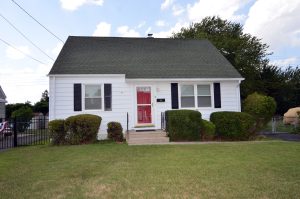
Cape Cod homes are part of the mix of established housing found throughout Groveville and the broader Yardville area.
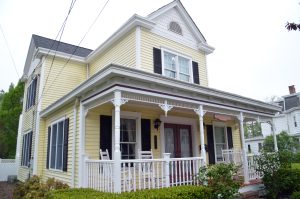
Older Victorian-style homes add another layer to Groveville’s residential character and show how varied the area’s established housing can be.
Even within Groveville, the differences can be noticeable.
A Victorian-style home with a wide front porch and decorative details tells a very different architectural story from a nearby Cape Cod, yet both are part of the area’s established residential landscape.
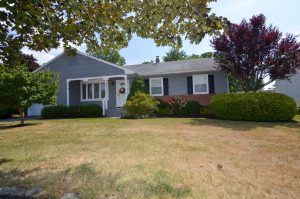
Ranch homes remain one of the most recognizable housing styles throughout Sunnybrae and other established parts of Yardville.
Sunnybrae’s ranches and split-levels reflect the postwar suburban growth that created many of the residential streets people now associate with Yardville.
Yardville Heights adds another variation, with Cape Cods, smaller ranches, split-levels, and other homes reflecting that same broad period of growth.
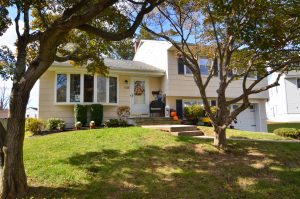
Split-level homes add another familiar style to the residential mix found throughout Yardville Heights and the area’s earlier neighborhoods.
A Victorian-style home or Cape Cod in Groveville can feel very different from a ranch in Sunnybrae or a split-level in Yardville Heights, even though all are part of the broader residential landscape associated with Yardville.
That variety is still easy to recognize when driving through these neighborhoods today.
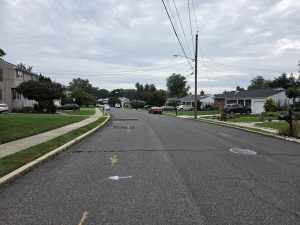
Residential streets throughout Sunnybrae reflect much of the established mid-century character that continues to define older sections of Yardville.
The homes don’t all look alike, and the streets don’t all follow the same pattern, but together they represent several periods in Yardville’s residential development.
These are neighborhoods where generations of residents have lived and where familiar street names became part of everyday directions and the way people came to recognize Yardville.
Yardville continued to grow, and later residential development would add another noticeably different layer.
How Yardville’s Housing Continued To Evolve
Later neighborhoods such as the Highlands and Washington Square brought a noticeably different scale to Yardville’s housing.
Compared with many of the ranches, Cape Cods, split-levels, and traditional homes found throughout Yardville’s earlier neighborhoods, these later sections introduced larger two-story homes and larger floor plans reflecting a different period of suburban development.
Drive from Sunnybrae or Yardville Heights into these areas and the homes, lots, street layouts, and overall neighborhood scale begin to change.
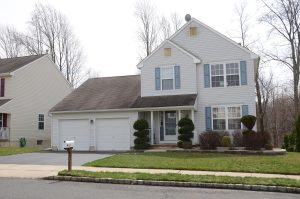
Later neighborhoods such as the Highlands added larger two-story homes and more expansive floor plans to Yardville’s mix of residential styles.
The Highlands reflects that transition with traditional two-story colonials and larger layouts than those found in many of Yardville’s earlier neighborhoods.
Washington Square provides another example, with larger homes, more expansive lots, and a noticeably different neighborhood scale.
Newer residential pockets such as Old York Estates add another layer, showing that Yardville’s housing story has continued to evolve.
Together, these neighborhoods show how Yardville continued to develop over several generations.
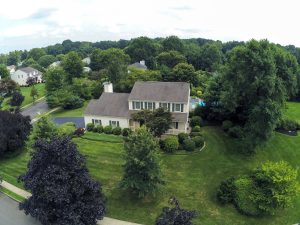
Washington Square reflects a later period of Yardville’s residential growth, with larger homes, more expansive lots, and a different neighborhood scale.
Yardville also includes homes and smaller residential pockets that don’t follow the same subdivision patterns.
In some areas, larger properties, open surroundings, and a more rural setting create a noticeable contrast with the established neighborhoods only a short distance away.
That adds another dimension to Yardville’s housing mix.
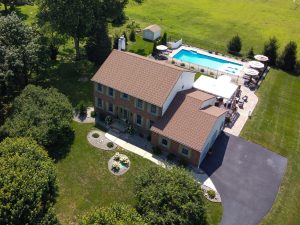
Beyond its established subdivisions, parts of Yardville have a more open setting with larger homes and considerably more land.
Spend enough time throughout Yardville and the differences between these individual pockets become easy to recognize.
Yardville isn’t defined by one period of development or one type of house.
Its established neighborhoods, later subdivisions, and more rural areas reflect several generations of Hamilton Township’s growth while still sharing an identity residents recognize as Yardville.
Parks, Playing Fields And Community Traditions
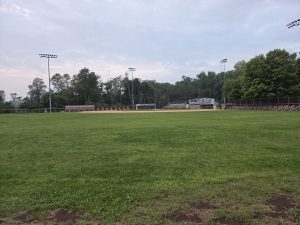
Historic Bonacci Field at Switlik Park is connected to the beginnings of Babe Ruth League, which started in Hamilton Township in 1951.
One of Yardville’s most interesting community stories can be found at Switlik Park.
In 1951, a group of local organizers met at the Yardville Hotel and laid the groundwork for the baseball program originally known as the Little Bigger League. Its first game was played at Switlik Park on May 14 of that year.
The organization later became Babe Ruth League, growing from its Hamilton Township beginnings into a nationwide and international youth baseball and softball organization. Babe Ruth League’s International Headquarters remains in Hamilton Township today.
Historic Bonacci Field at Switlik Park still serves as a visible reminder of where that story began.
But baseball in Yardville is also part of everyday community life.
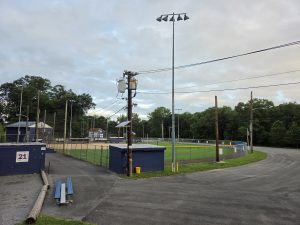
Sunnybrae Little League is one of the familiar local recreation spaces that has long been part of everyday life in the Yardville community.
Sunnybrae Little League has been another familiar part of the community for generations of local players and families.
Practices, games, and time spent along the sidelines are the kinds of everyday experiences that become tied to a neighborhood over time.
Apollo Park carries a different kind of community story.
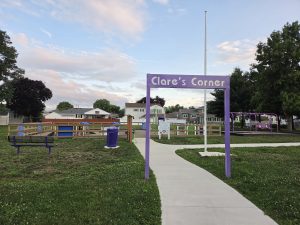
Clare’s Corner was added to Apollo Park in 2024 as a playground for young children inspired by the memory of Clare Easton.
Clare’s Corner was added to Apollo Park in 2024 through a community partnership. Designed for younger children, the playground was inspired by the memory of Clare Easton and created as a place for local families to enjoy.
Switlik Park, Sunnybrae Little League, and Apollo Park each carry a different kind of community connection, from local baseball history to generations of everyday recreation and newer spaces created with deeper meaning.
Together, they help explain how parks, playing fields, and community traditions become part of Yardville’s identity.
The Familiar Places And Landmarks Around Yardville
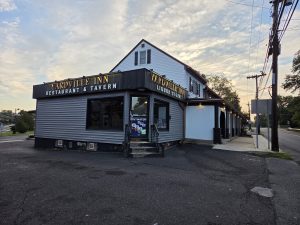
The building historically known as the Yardville Hotel dates to 1799 and remains one of Yardville’s most recognizable landmarks.
Some places become so familiar that their names simply become part of how people describe an area.
The Yardville Inn is one of them.
Historically known as the Yardville Hotel, the building dates to 1799 and has remained part of the local landscape through generations of change.
For many residents, it is simply one of those places that has long been associated with Yardville.
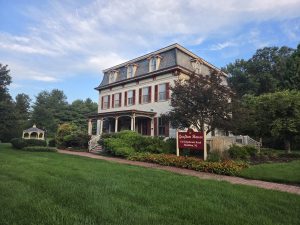
The Grafton House is another historic Hamilton Township landmark connected to the broader Yardville area and its earlier landscape.
The Grafton House offers a different connection to the area’s past.
Once home to Mercer County’s first sheriff, the house takes its name from the historic 166-acre Grafton estate that once occupied land near where it stands today.
That estate bordered the road connecting Yardville with Newtown, now known as Robbinsville, giving the property a direct connection to the area’s earlier landscape.
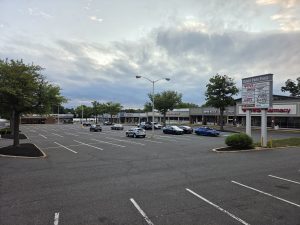
Dover Park Plaza is one of the familiar everyday reference points residents have long associated with the Yardville area.
Dover Park Plaza represents the more everyday side of that familiarity.
It is the kind of place residents recognize when giving directions, describing where they live, or explaining which part of Yardville they’re talking about.
Historic landmarks and everyday places play different roles, but together they become part of how people recognize a community and describe where home is.
Why Yardville Still Feels Like Its Own Community
Yardville’s identity isn’t built around one landmark or one moment in its history.
It developed over generations, from an early rural village setting to postwar neighborhoods, later subdivisions, and newer residential areas, while the Yardville name continued.
That identity is reinforced by the roads people travel, the neighborhoods and housing styles that developed at different times, the parks and playing fields where traditions took hold, and the familiar landmarks residents still use as reference points.
Put those pieces together and Yardville feels like more than simply another section of a large township.
That’s why someone can live in Hamilton Township and still naturally say they’re from Yardville.
Spend enough time throughout Hamilton Township and you see how quickly neighborhoods can change in look, history, and feel within only a few miles.
Yardville is one of the clearest examples.
What This Means For You
If you’re starting to think about your next move, whether buying or selling, understanding what to expect in the current real estate market can help you be better prepared and put yourself in a stronger position.
I’ve been working in real estate since I was licensed in 2012, with nearly 500 real estate transactions across Hamilton Township, Bordentown, Florence Township, Roebling, and surrounding areas. And one thing I’ve learned is that every town, and even different sections within a town, can feel very different depending on the home and the buyer.
My approach is simple and relationship-driven. I focus on helping you make the right decision for your situation, not just the next transaction.
If you want to talk through your situation, explore your options, and get a better feel for what makes the most sense, I’m always here to help.
Explore More Local Real Estate Options
Whether you’re thinking about buying, selling, or simply keeping an eye on the market, you can explore homes for sale and home values throughout Hamilton Township, Bordentown, Florence, Roebling, and surrounding areas below.
⬇️ Click any image below to explore homes for sale in that area.