Facebook
 X
X
 Pinterest
 Copy Link
Top 3 Reasons To Buy a Home Before Spring

Top 3 Reasons To Buy a Home Before Spring

If you’re planning to buy a home this year, you may be focused on the spring market. And hoping that when spring does hit, you’ll see:
- Mortgage rates drop a little more.
- More homes hit the market.
But here’s what most buyers don’t realize. Buying just a few weeks earlier could mean paying less, dealing with less stress, and feeling less rushed.
Here are three reasons why accelerating your timeline over the next few weeks could actually be a better play.
1. Holding Out for Lower Rates May Not Pay Off
A lot of buyers are hoping mortgage rates will fall even further. But that’s not the best strategy. Here’s why. Experts are pretty aligned on this: rates are expected to stay roughly where they are.
Forecasts throughout the industry all point to the same thing: rates are projected to be in the low-6% range this year (see graph below):
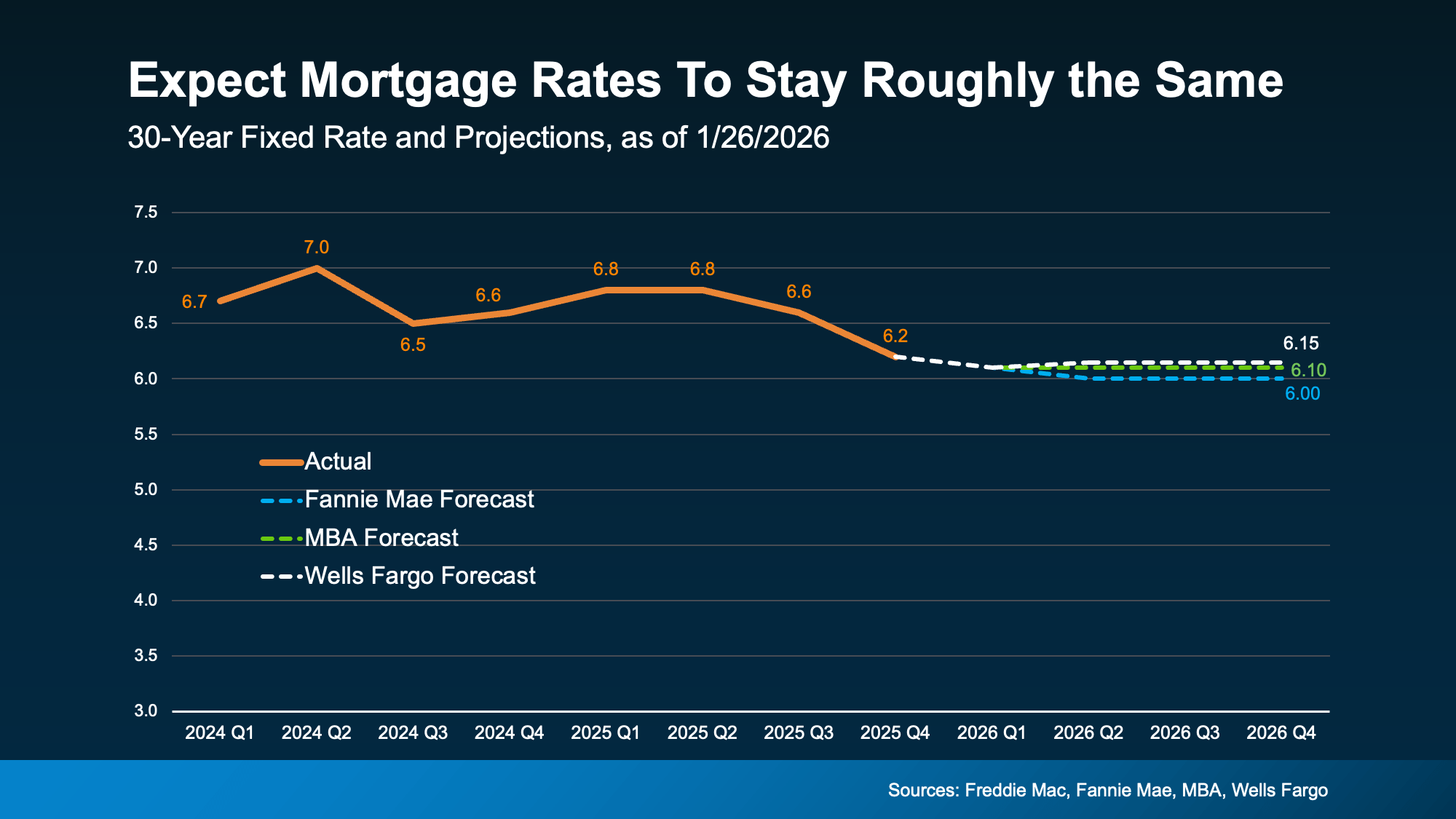 That’s not a bad thing, especially if you consider how much rates have already come down. Over the past 12 months, they’ve dropped roughly a full percentage point. And for many buyers, that means affordability has already improved more than they may realize.
So why wait a few more weeks just for more buyers to jump in and act as your competition? You already have a window right now. As Chen Zhao, Head of Economics Research at Redfin, explains:
“House hunters should know that this may be near the lowest mortgage rates fall for the foreseeable future.”
2. Spring Means More Competition + More Stress
Speaking of competition, the spring market is popular for a reason, but with popularity comes pressure. With more buyers active at that time of year, you’ll have to move faster once you find a home you like. And no one likes feeling rushed.
But buy now and you have more time to browse. Fewer people are looking, so homes sit longer.
You can see this play out in the data from Realtor.com (see graph below). In winter months, it takes an average of about 70 days for a home to sell. In spring? That drops to about 50 days. That’s a 20-day swing – and that pace is going to be more stressful.
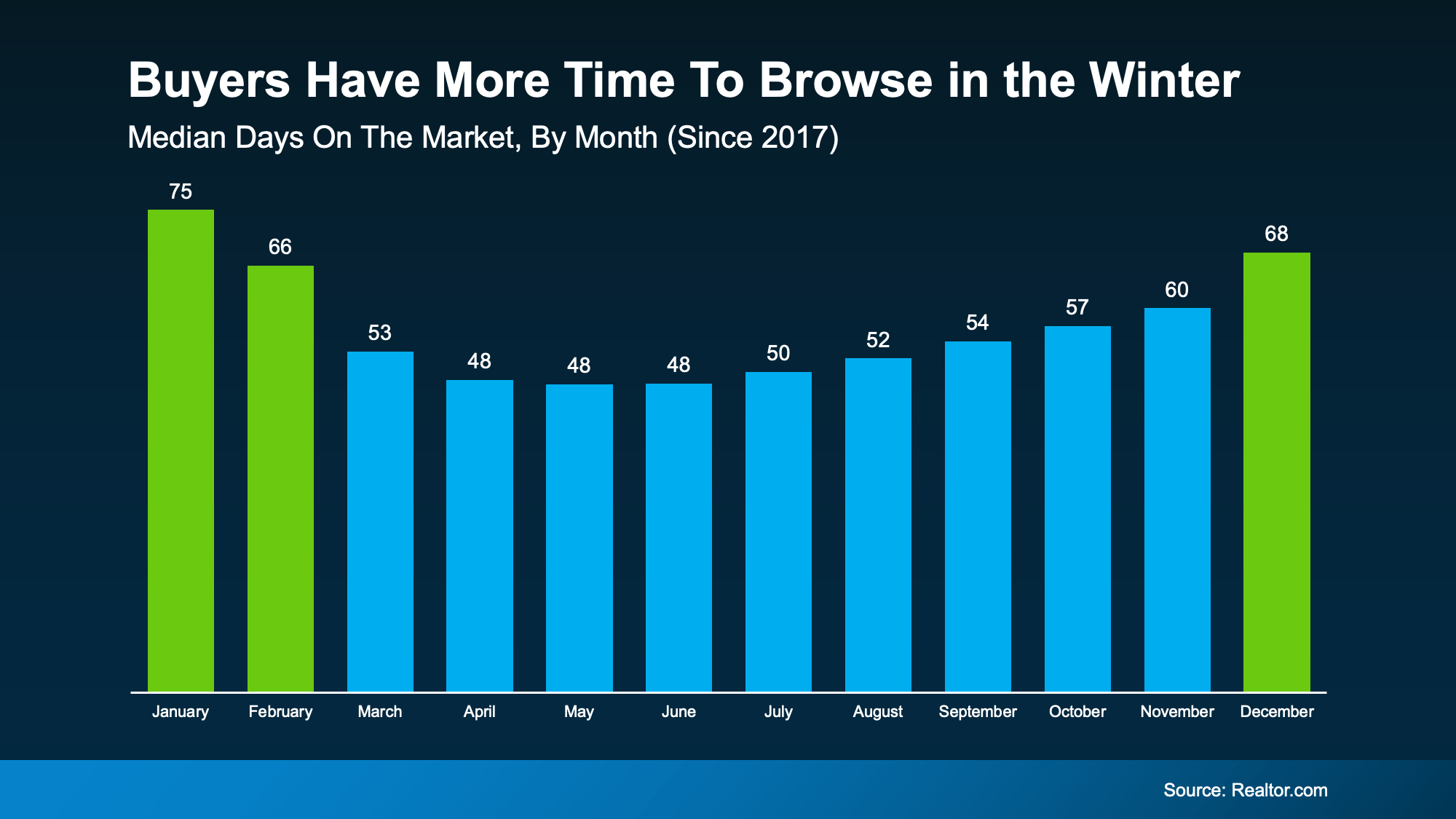 Homes sell faster in the spring, and slower in the winter. And that can be a worthwhile perk for buyers who want to get ahead before their decisions start to feel rushed.
3. Prices Tend To Rise When Competition Heats Up
And here’s something most buyers forget to factor in. Prices usually respond to demand. So, when demand is higher, prices are too. Bankrate explains:
“Spring and early summer are the busiest and most competitive time of year for the real estate market . . . home prices tend to be steeper to reflect the increased demand.”
In fact, data from the National Association of Realtors (NAR) shows that in 2025, buyers who purchased in the beginning of the year saved roughly $30,000–$35,000 compared to those who bought when prices peaked in the spring or early summer.
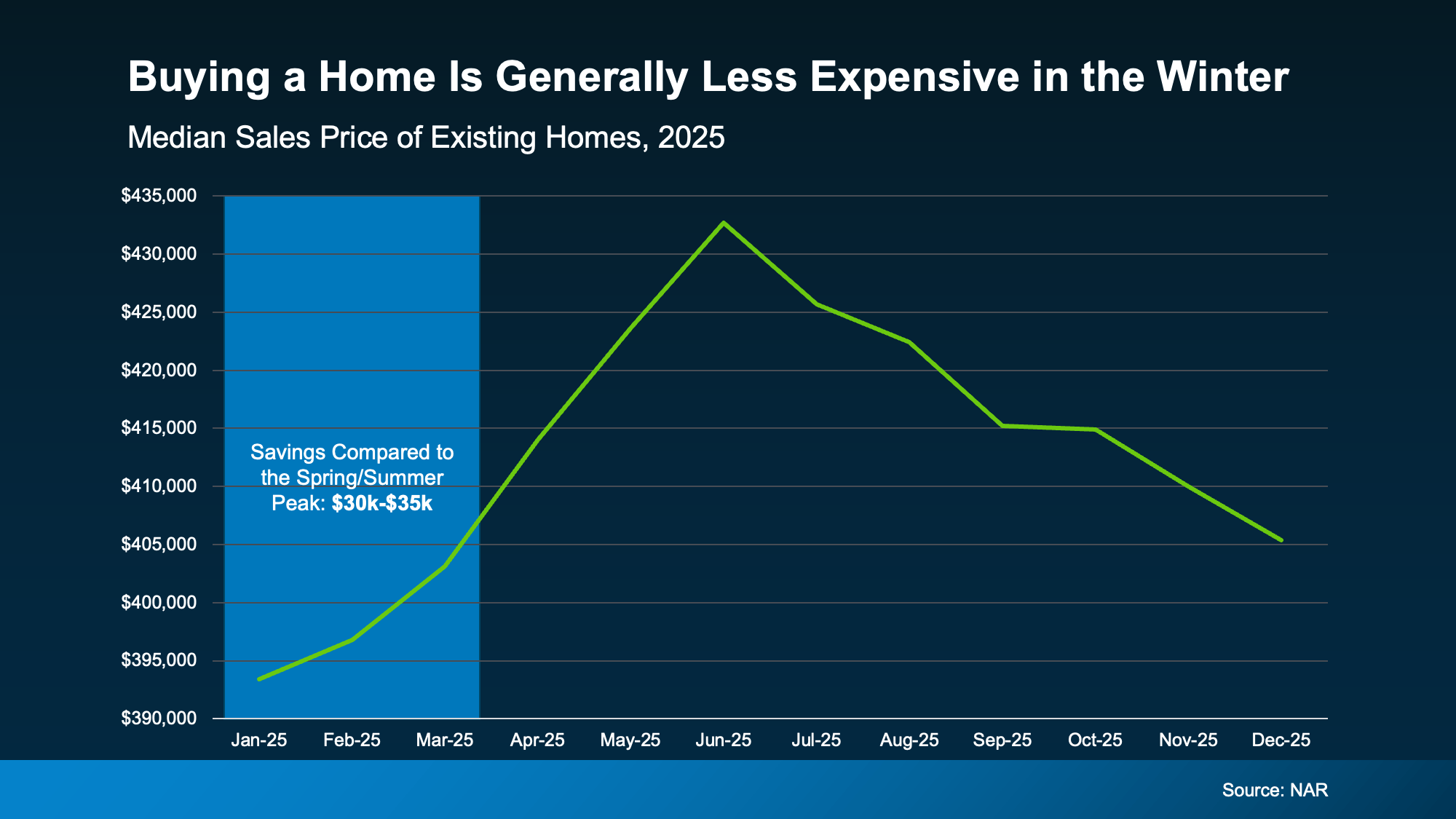 And let’s be honest, for a lot of buyers today, every little bit of savings helps. That’s why buying just a few weeks earlier, before prices ramp up, will be better for you and your wallet.
Bottom Line
Buying a few weeks before spring isn’t about rushing. It’s about choosing to be ahead of the curve and knowing you want more leverage, less stress, and meaningful savings.
If you’re ready and able to buy now and want to get the ball rolling, let’s connect.
Home Updates That Actually Pay You Back When You Sell
Home Updates That Actually Pay You Back When You Sell
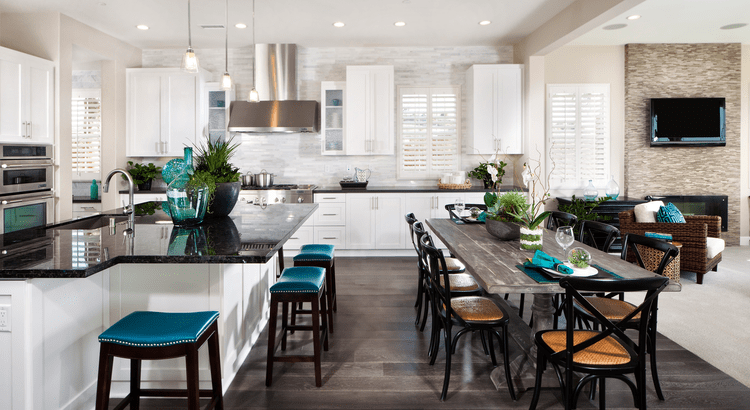
Planning to sell this spring? While you may be tempted to hold off until the first blooms or the spring showers hit, that’s actually waiting too long to get started by today’s standards.
Buyers have more options than they did a few years ago. So, it’s worth it to tackle repairs now and make sure your house is set up to stand out. Because you don’t want to be caught scrambling right before the spring rush. Or, running out of time to do the work your house really needs.
The key is focusing on updates that actually matter. And that’s exactly where return-on-investment (ROI) data comes in handy.
Which Projects Tend to Pay Off?
Every year, Zonda looks at which home improvements deliver the most bang for the buck when you go to sell the home. And the results can be a little surprising.
The green in the chart below shows the updates where sellers have the biggest potential to add value based on that research:
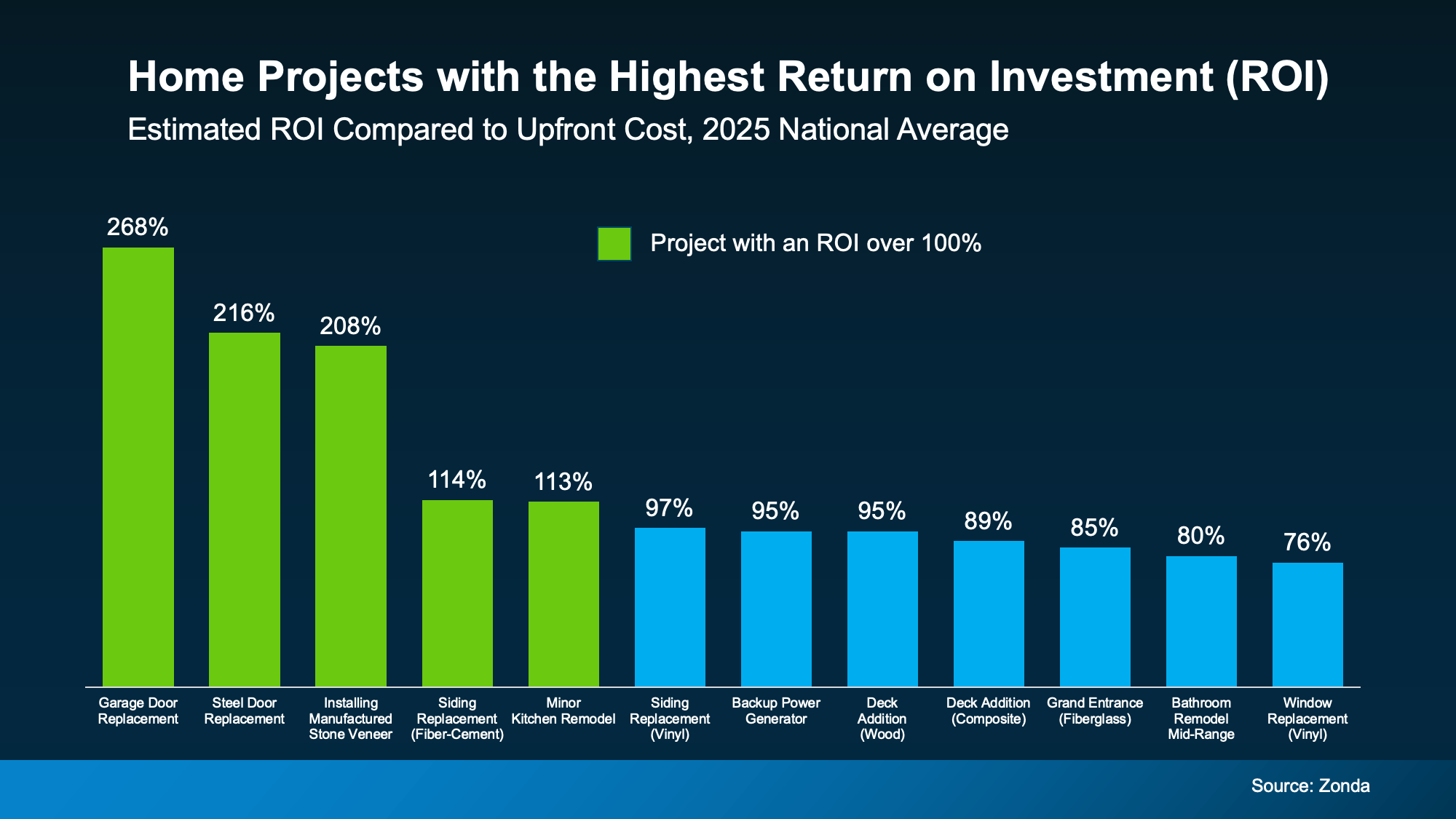 While there’s a wide range of projects represented in this data, the cool part is, some of the top winners aren’t big to-do’s. They’re just swapping out doors.
Small Updates, Big Visual Impact
This goes to show little projects can have a big impact. So, you don’t have to spend a fortune. And you don’t need to tackle everything on this list. But in today’s market, doing nothing can work against you.
Now that buyers have more homes to choose from, a lot of them are going to opt for what’s move-in ready.
The best advice? Focus on what your house needs, whether it’s listed here or not – like the repairs you’ve been putting off. A front door or shutters in need of a little TLC. Piles of leaves in the yard. Scuffed up paint where your kids play inside. Those details matter too.
Mallory Slesser, Interior designer and Home Stager, explains it to the National Association of Realtors (NAR) this way:
“If you’re looking for affordable updates that pack a punch, dollar for dollar, I would say painting; changing out light fixtures; changing out hardware; maybe new draperies or window treatments. Those are all cost-effective ways to make a big statement. It really changes the space.”
These seemingly small things help buyers focus on the home itself – not the work they think they’ll have to do after moving in. And that’s paying off for other sellers. Buyers are often willing to spend more on homes that feel well cared for, updated, and move-in ready.
This Chart Is a Starting Point, Not a Strategy
Here’s the important thing to remember. National data like this is a guideline. Buyer preferences are going to vary by location, price point, and even neighborhood. That means a project that boosts value in one area might be unnecessary (or even overkill) in yours.
That’s why the first step should always be to talk with a local real estate professional before you start.
An experienced agent can help you answer questions like:
- Which updates do buyers in your market expect?
- What can you skip without hurting your sale?
- Where will a small investment make the biggest difference?
- Is it better to update, or sell as-is?
That guidance helps you avoid over-improving and under-preparing.
Bottom Line
If you’re looking to sell this spring, you still have time to make updates that help your home stand out – without taking on a full renovation.
If you’re not sure where to start, let’s talk through what makes sense for your house. A quick conversation can help you prioritize the updates that’ll pack the biggest punch.
What’s one upgrade you’ve been thinking about – and wondering if it’s worth it?
3 Things To Do When Selling Your House in 2024

If this year’s goal includes selling your home, you may be navigating a sea of emotions. From the excitement of moving forward to a tinge of nostalgia for the memories housed within your walls, it’s a journey that’s both thrilling and sad.
Embarking on this venture with confidence requires a strategic approach, rooted in three must haves that ensure a seamless and successful home sale.
Strategically Set Your Home’s Price
The landscape of real estate underwent notable changes in 2023, marked by rising mortgage rates and a shift towards more stable home appreciation rates. For sellers, this evolution underscores the criticality of pricing homes in alignment with current market dynamics. As noted by Hannah Jones, an Economic Research Analyst at Realtor.com, “Understanding the local market nuances and collaborating with a seasoned local realtor are key in creating a compelling listing. With buyers increasingly scrutinizing affordability, only those homes that are priced right and maintained well will ignite significant interest.”
Incorrect pricing may scare potential buyers or lead to potential financial losses. Leverage the expertise of a trusted REALTOR® to find the right spot in pricing—ensuring a swift sale at the highest price.
Manage Emotional Ties with Professionalism
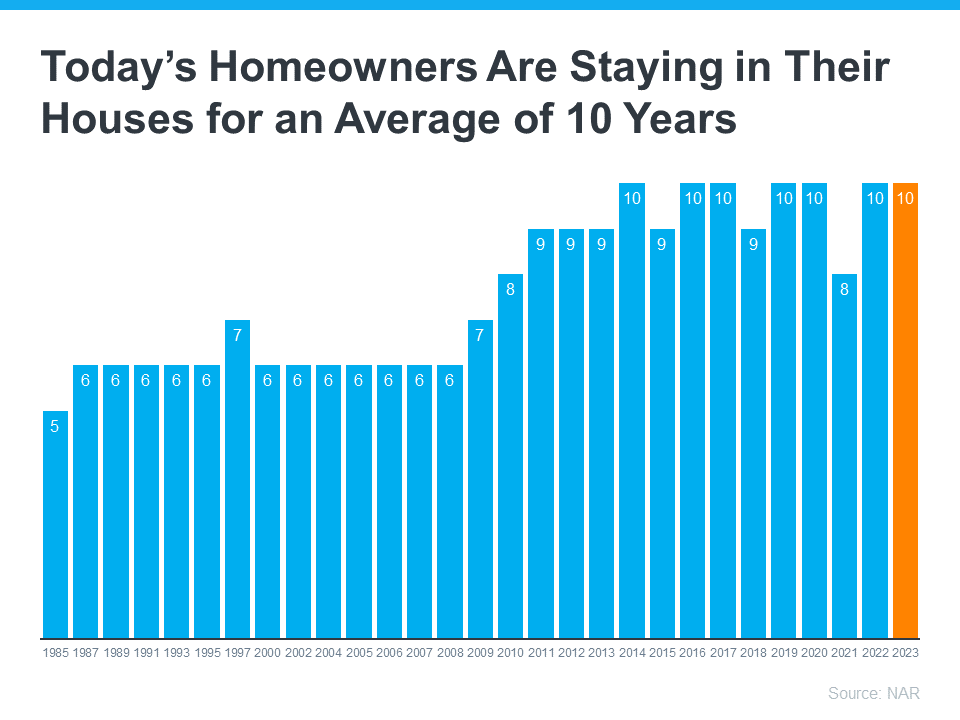
The bond between homeowners and their home has deepened over the years. The tenure of ownership has extended from the previous norm of 6 years to now over 10 years. This extended period can intensify the sentimental attachment to a home, making it challenging to objectively assess its value.
Navigating these emotional waters requires a professional touch. A REALTOR® may provide the necessary skills to price your home appropriately, ensuring that emotional value doesn’t cloud financial judgment.
 Optimize Home Presentation
 Optimize Home Presentation
Your home’s personal touches, while meaningful to you, may not resonate with every potential buyer. The key to broad appeal lies in staging your home to highlight its best features. This will allow buyers to envision themselves in the home. Jessica Lautz, Deputy Chief Economist and Vice President of Research at NAR, emphasizes, “Enabling prospective buyers to see themselves in the space is crucial, and staging plays a vital role in showcasing the home’s potential.”
A professional’s insight can guide you in preparing your home for the market, ensuring it makes a memorable first impression.
Closing Thoughts
As you contemplate selling your home, speak with a professional. This ensures that these critical steps are not just considered but executed. Let’s connect to navigate your home selling journey with expertise and care. Ready to see what your home is worth in today’s market please CLICK HERE.
Prepare to be a Strong Buyer and Achieve the American Dream

Buying a home is a powerful decision, and it remains at the heart of the American Dream. Buying a home, especially in a competitive market, requires patience and sometimes flexibility. To ensure you’re a strong buyer in the competitive New Jersey real estate market, consider the following steps, drawn from a variety of expert sources:
- Work with a Trusted REALTOR®: A knowledgeable real estate agent can guide you through the buying process. They will provide valuable market insights, and help craft a compelling offer.
- Get Pre-approved for a Mortgage: A pre-approval signals to sellers that you’re a serious and capable buyer. It’s crucial to differentiate between pre-qualification and pre-approval. A pre-approval involves a more in-depth look at your financial situation.
- Save for a Down Payment and Closing Costs: While 20% is often cited as the ideal down payment, many first-time buyers put down much less. Explore lender and local programs, which allow for down payments as low as 3%. Remember, the size of your down payment affects your mortgage options and monthly payments.
- Improve Your Credit Score: A higher credit score can secure you better mortgage terms. Take time to correct any errors on your credit report and pay down existing debt to improve your score.
- Budget Wisely: Don’t stretch yourself too thin. Allocate a comfortable portion of your income to housing and try to minimize your down payment to keep savings intact post-purchase.
- Research and Understand the Market: Work with a REALTOR® to understand home values and tailor your offer accordingly. Knowing the seller’s motivations may also give you a competitive edge.
- Make a Respectable Offer: Avoid lowball offers, which can sour negotiations with the seller. Your offer should be competitive and backed by market data.
- Limit Contingencies: While some contingencies are essential, like those for financing and inspection, reducing non-essential contingencies can make your offer more appealing in a competitive market.
Remember, every market is unique, and strategies may vary based on local conditions. Staying flexible and well-informed will enhance your position as a strong buyer. Buying a home is a powerful decision and the cornerstone of the American Dream. If finding a place to call your own is part of your dream for this year, let’s connect to start the process today. CLICK HERE to view homes for sale.
The New Jersey Housing Market Overview in 2024

The New Jersey housing market in 2024 presents a complex and dynamic landscape shaped by a series of contrasting trends and regional variances. Understanding these items is crucial for both potential sellers and buyers navigating this competitive environment. The best way to understand the current housing market is to reach out to a REALTOR® who will be able to explain your specific market.
Market Dynamics and Trends
Pricing and Sales Trends: The housing market has seen significant price appreciation, with home values in New Jersey experiencing a notable increase. In January 2024, home prices were up by 15.9% year-over-year, even as the number of homes sold fell by 7.1%, and the inventory of homes for sale decreased by 16.4%. This trend reflects a robust demand for housing, despite rising prices and dwindling supply.
Inventory and Supply Challenges: The inventory of homes has substantially decreased, leading to a constrained supply environment. For example, the inventory of townhouse-condos saw a 10.8% reduction, although the months’ supply of inventory showed a nuanced increase, indicating a slight balance between supply and demand.
Seller’s Market Dominance: The market conditions heavily favor sellers, attributed to high demand for properties coupled with limited inventory. Sellers are often receiving multiple offers, sometimes selling at or above list price, which underscores the competitive nature of the New Jersey housing market in 2024.
Regional Market Forecasts: Specific areas such as the Trenton/Mercer area show steady growth projections, with an expected increase in home values. This growth is not uniform across the state, with different regions experiencing varying growth rates.
Commercial Real Estate and Specialized Markets
Commercial Real Estate Activity: There’s a significant focus on maximizing asset performance through leasing velocity and repositioning existing Gross Leasable Area (GLA). Developments such as the construction of industrial buildings and major redevelopments in retail shopping centers indicate a proactive commercial real estate market.
Multifamily and Mixed-Use Developments: The multifamily and mixed-use sectors remain strong, driven by local and regional economic factors, a robust job market, and systemic barriers to homeownership which are creating more long-term renters. These segments are adapting to evolving tenant demands, including preferences for amenity-rich, flexible living spaces, and smart home technology.
Future Outlook and Considerations
Buyer’s Market Potential: While the market currently favors sellers, certain regions of New Jersey may be transitioning towards a buyer’s market, offering strategic advantages for potential buyers. This shift is indicated by a drop in median sales prices and a slowdown in market speed in some areas.
Economic and External Influences: The overall stability of the New Jersey housing market is supported by a strong economy and population growth. However, potential shifts in economic indicators, interest rates, and government policies remain critical factors to watch.
Advice for Navigating the Market: Both buyers and sellers are advised to work with experienced real estate professionals to navigate the complexities of the market. For buyers, understanding the competitive nature and being prepared to act swiftly is key, while sellers should focus on competitive pricing and effective property presentation.
The New Jersey housing market in 2024 is characterized by robust demand, limited inventory, and significant regional differences. Sellers currently enjoy a competitive edge, but market dynamics could shift, offering new opportunities for buyers. Staying informed and leveraging professional guidance are essential strategies for success in this market. Feel free to reach out so we may discuss your own specific market.
Prepping Your Home for the Real Estate Market

Enhancing your home’s appeal requires a strategic approach that goes beyond basic decluttering and repainting. A comprehensive plan can significantly influence how swiftly and profitably you sell your home. While your unique decor and personalized touches have made your house a home, it’s essential to remember that potential buyers may not share your taste. The key is to present your home in a way that resonates broadly, making it as appealing as possible to a diverse audience. This involves not just addressing the well-known aspects of home preparation but also attending to the finer details that enhance your home’s allure.
From the curb appeal to the interior’s flow, every element should contribute to an inviting atmosphere that encourages buyers to envision themselves living there. Here’s a comprehensive approach that ensures your home stands out in a competitive market:
- Boost Curb Appeal: Simple enhancements like repainting the front door, planting flowers, and ensuring the lawn and bushes are trimmed can make a strong first impression.
- Pre-listing Inspections: A proactive inspection can uncover hidden problems, allowing you to address them before they become stumbling blocks during the transaction.
- Declutter and Depersonalize: Creating a neutral environment allows potential buyers to imagine their own lives in the space, making your home more appealing.
- Ready the Exterior and Garage: Maintain the exterior, patio, and garage. A clean front door, well-maintained walkways, and an organized garage can significantly enhance curb appeal.
- Perform Minor Repairs: Small fixes, such as tightening loose handles and patching scuffs, can make a big difference in how buyers perceive the care and upkeep of the home.
- Repaint Walls in Neutral Tones: Neutral walls serve as a blank canvas, enabling buyers to project their own vision and lifestyle onto the space.

- Deep Clean: A thorough cleaning, including hard-to-reach areas like vents and ceiling fans, showcases your home’s cleanliness and upkeep. This level of detail shows care and maintenance.
- Pay Attention to Small Details: Wipe down light switches, door handles, and ensure garbage and recycling are out of sight. Adjust the thermostat to a comfortable temperature for showings.
- Professional Photography and Staging: High-quality photos and strategic staging can highlight your home’s best features. Consider adding small touches like a bowl of fruit or fresh flowers to add warmth and color.
- Ensure All Rooms are Ready: Each room, including the kitchen, bedrooms, and bathrooms, should be meticulously cleaned and staged. For example, keep countertops clear, make beds daily, and ensure bathrooms sparkle.


These steps cover the broad spectrum of preparations needed, from the well-known to the often-overlooked details that can make your home stand out in a competitive market. Remember, the goal is to create a space that potential buyers can easily see themselves calling home. For more insights and tips on making your home market-ready please reach out direct at 609-462-0062. To get the inside scoop on the real estate market in your preferred neighborhood, click Neighborhood.PhilipAngarone.com to unlock local real estate insights. Stay informed and ahead of the curve with exclusive updates and expert advice tailored to your local neighborhood.